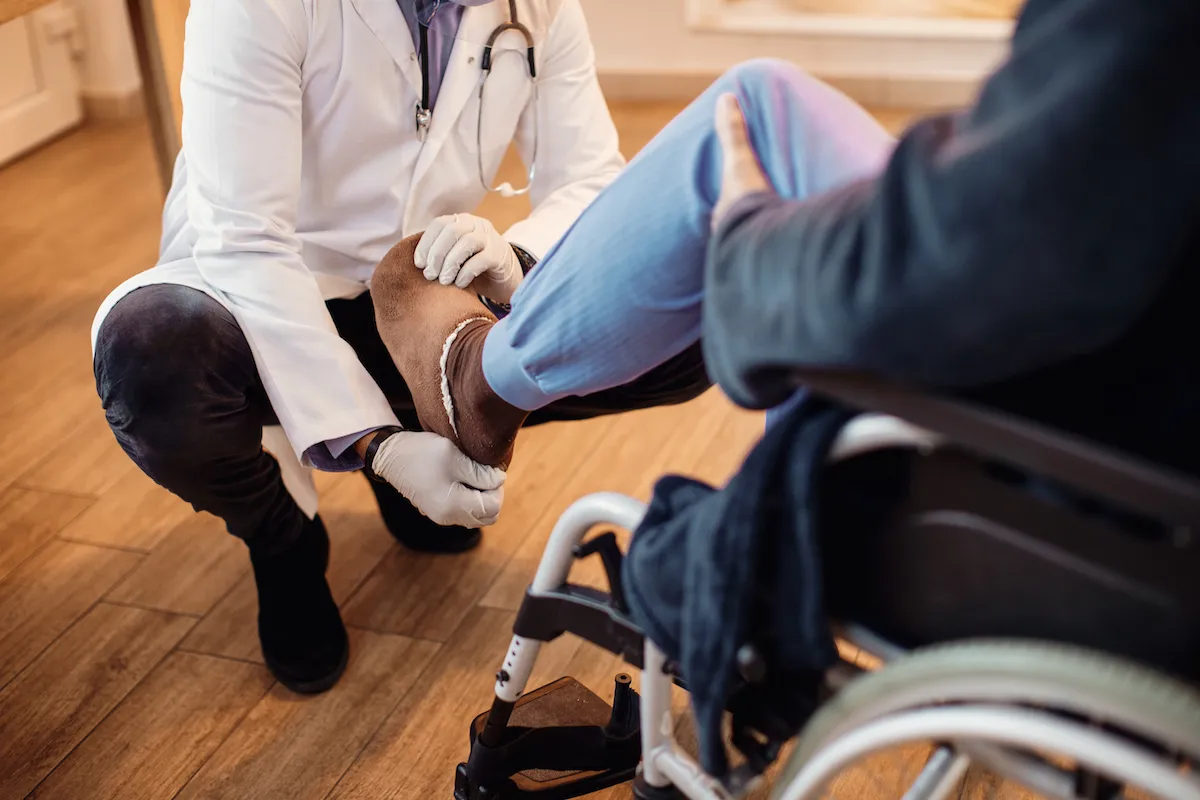
Leg pain and circulation care nearby
Blocked leg arteries, slow-healing foot wounds and dialysis access problems can often be treated with catheter-based care. FCCI does this work at its outpatient cath labs, including the one in Palatka.
Peripheral artery disease (PAD)
PAD means the arteries in your legs are narrowed or blocked, so your muscles and skin do not get enough blood. Signs can include pain or cramping when you walk, swelling, color changes in the skin, and wounds on the feet or legs that will not heal.
In FCCI's cath labs, doctors can look at leg arteries with peripheral angiography and treat blockages with balloons, stents, atherectomy devices or Shockwave lithotripsy for hard, calcified blockages. FCCI says it plainly: amputation should always be the last resort.
Leg pain checks start at the Palatka office, 205 Zeagler Drive, Suite 101. Call 386.325.2836 on a weekday, mention the cramping or wounds you have noticed, and the team will set up a PAD evaluation.
Amputation prevention
FCCI runs an Amputation Prevention Center where board-certified cardiologists and wound care specialists work together. The team tests for blockages, then a cardiologist builds a personal treatment plan for healing and prevention.
Wound care specialists diagnose diabetic foot ulcers, arterial ulcers, venous ulcers, pressure ulcers, and traumatic or surgical wounds. Treatments can include hyperbaric oxygen, skin grafts, amniotic membrane therapies, vascular testing and early endovascular treatment. Dr. Yazan Khatib co-founded the Save a Leg, Save a Life Foundation, which works to prevent amputations in people with diabetes and PAD.
FCCI has treated circulation problems across Northeast Florida since 2002, and the Palatka cath lab, accredited since 2016, is where many blocked leg arteries get opened.
Dialysis access care in Putnam County
FCCI has more than 10 years of experience caring for people with chronic kidney disease. It has performed thousands of hemodialysis access procedures in its outpatient cath labs in both Duval and Putnam counties.
- Angiograms, declotting, angioplasty and stents for fistulas and grafts
- Artery and vein ultrasound, DVT studies and fistula mapping
- Temporary dialysis catheter placement and tunnel catheter removal
- Quick lab checks like potassium and hemoglobin
FCCI's cardiologists work closely with your kidney doctor and dialysis center and send quick feedback.
When a dialysis access problem lands you in HCA Florida Putnam Hospital, FCCI physicians cover the hospital day and night. Ask for First Coast Cardiovascular Institute so your access team knows what happened.
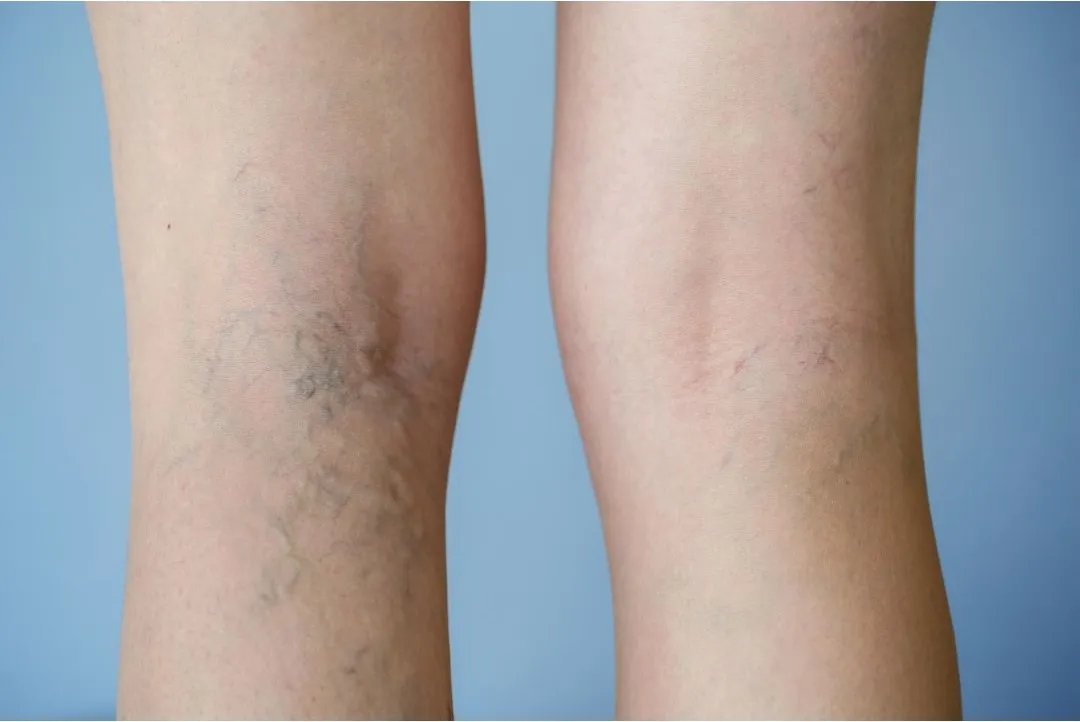
Leg swelling and veins
Leg pain, swelling and varicose veins can point to vein problems, including blood clots in the deep veins (DVT). A venous duplex ultrasound can check for clots. FCCI's Vein Clinic takes a whole-person approach to vein health, and its vascular testing is accredited by the Intersocietal Accreditation Commission.
Sudden shortness of breath or chest pain can mean a clot has moved to the lungs. Call 911.
Not sure if your leg symptoms need a cardiologist or a vein check? Call 386.325.2836, weekdays 8 a.m. to 5 p.m., or request a visit online. Leave health details out of the form and tell the team by phone.
Swollen legs and vein problems are checked at 205 Zeagler Drive, Suite 101 in Palatka, close to home for Crescent City, Interlachen and San Mateo neighbors.
Talk with a specialist.
New patients are welcome. Call 386.325.2836, Mon to Fri, 8am to 5pm, or request a visit online.
Is leg pain when I walk a heart problem?
It can be a sign of PAD, a blockage in the leg arteries. Only a checkup and testing can tell. Call 386.325.2836 to be seen.
Can a blocked leg artery be treated without surgery?
Often, yes. FCCI treats many leg artery blockages with catheter-based procedures in its outpatient cath labs. Your doctor will tell you what fits your case.
Does FCCI do dialysis access in Putnam County?
Yes. FCCI performs hemodialysis access procedures in its outpatient cath labs in Duval and Putnam counties.
Keep exploring.
 Heart care in Palatka
Your Palatka cardiologist, right down the road
First Coast Cardiovascular Institute (FCCI) runs a full cardiology office and outpatient cath lab at 205 Zeagler Drive in Palatka, so Putnam County families can get heart and vascular care without the long drive to Jacksonville.
Read more Outpatient catheterization lab
A cath lab right here in Palatka
FCCI opened its second freestanding outpatient cath lab in Palatka in 2016. Many heart and leg artery procedures can be done there without a hospital stay, in a comfortable setting close to home.
Read more Testing
Heart and vascular tests, explained
FCCI's Palatka office is one of its five nuclear cardiology lab locations. Here is what common heart and vascular tests involve, in plain English, and how to get ready.
Read more